
Drag artistry, in its most revealing form, underscores the critical role of performance in our daily lives. This is most evident when considering gender. Wigs, high heels, and cosmetics significantly underscore femininity as a contrived construct, as deliberately on display in the streets as it is on stage. In “Femme,” the first feature from Sam H. Freeman and Ng Choon Ping, this fundamental truth serves as the foundation for a wickedly entertaining revenge thriller set in London.
Jules (played by Nathan Stewart-Jarrett) truly comes alive when he steps into the limelight at a local bar as his alter ego, Aphrodite. Surrounded by voguing dancers, Aphrodite is aptly christened. She is a nocturnal deity. Seeing her illuminated solely by moonlight, it would be easy to be captivated by her elegance. However, such enchantment tends to fade in the harsh fluorescent lighting of a convenience store, especially when it highlights drag makeup.
“Is that a guy?” Jules hears a friend ask Preston (George MacKay of “1917”), as Aphrodite waits in line to buy a pack of cigarettes. In a closely framed shot, you see the queen contemplating her reaction to Preston’s blatant homophobia. Should she diminish herself to nothingness or strive to shine as brightly as she did on stage?
She chooses the latter. “How dare you call me a fag in front of your friends when I saw you sneaking glances at me earlier,” she retorts. The confrontation quickly descends into a brutal melee. Robbed of his wig, dress, and dignity while being filmed by Preston, Jules is left with nothing.
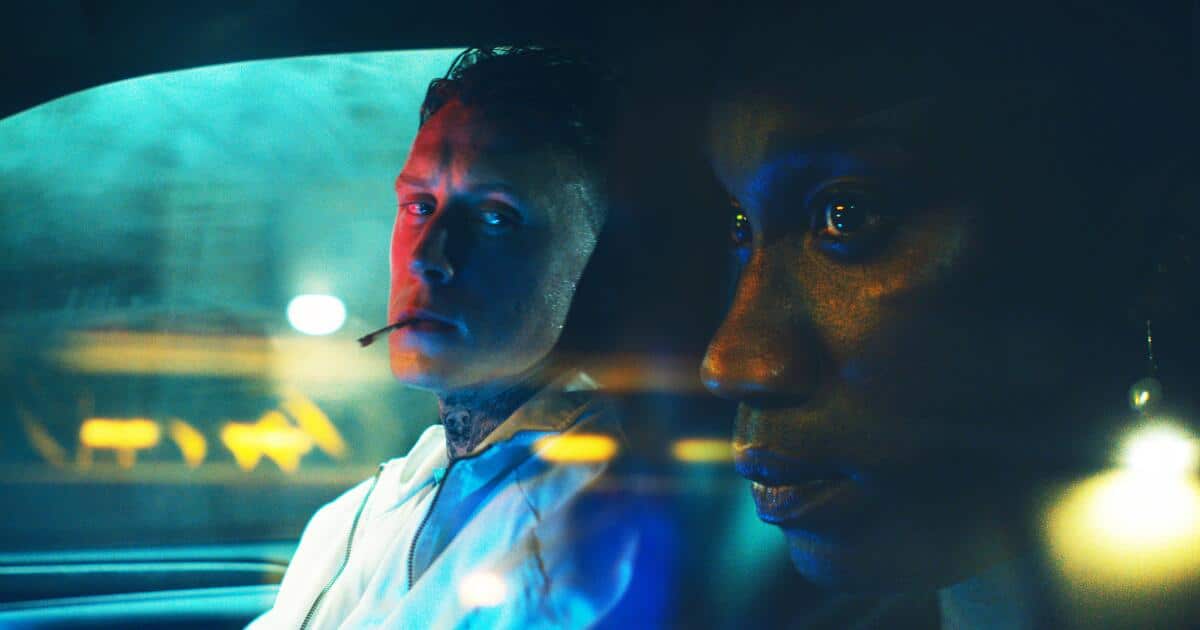
Imagine Jules’ surprise when he spots his attacker (all muscles, tattoos, and arrogance) at a bathhouse one day. Any self-pity he harbored after the assault evaporates. He follows Preston (who apparently doesn’t recognize him), gets into his car, and initiates the charged, erotically charged duel that forms the backbone of this chic, stylish queer neo-noir.
As he trawls the internet for explicit videos of “outed” masculine “straight” guys, Jules starts devising a scheme. If he can capture Preston on video, he may finally find closure, a way to settle the score with the bully whose provocative comment initially triggered the senseless violence. Underpinned by Adam Janota Bzowski’s drone-like synth score, illuminated by James Rhodes’ neon-infused cinematography, and edited with panache by Selina Macarthur, this scene is just one instance where “Femme” confidently asserts itself as a daring debut.
Already a skilled performer, Jules effortlessly becomes everything a closeted man could desire. Employing his shyness as his most effective seductive tool, Jules (and, correspondingly, Stewart-Jarrett) flawlessly embodies the homme fatale persona demanded by the film. This includes dressing “normally” for his dinner “dates” with Preston and indulging the fantasies he knows will arouse him.
These nocturnal rendezvous start off with a volatile, violent energy. However, they soon evolve into something more intimate. Away from his friends, Preston isn’t as tough as he pretends to be, hidden behind oversized sweatshirts and hardened smiles. And with such a protective partner (or perhaps due to being on the verge of filming his revenge sex tape), Jules finally manages to overcome the depression that had sidelined him.
The ongoing question in the film is whether this blossoming relationship is, or could ever be, genuine. Both young men are adept at performing and adapting their actions, words, and even their physical selves to fit their surroundings. Initially, they present each other with versions of themselves they can’t reveal to others. As they each question whether such vulnerability will prove to be detrimental, we’re left wondering if the film and the romance can conclude in anything other than violence.
Watching Stewart-Jarrett (a glittering steel blade) and MacKay (a hardened fist in bloom) portray this pair of damaged potential lovers is like observing two actors balancing on a knife’s edge. Their characters’ changeable motivations are often fracturing violently, to the point where it’s unclear what, if anything, is genuine.
Within the framework of this erotic-thriller premise, “Femme” emerges as a beautifully crafted reflection on queer and queered performance. As Freeman and Ng’s film reaches its inevitable brutal, bloody climax — as shocking as it is unavoidable — you’re left feeling as conflicted as its central duo. Bruised, certainly. But perhaps stronger for it.
Similar posts:
- New ‘Queer Rhapsody’ Film Series Hits LA – A Must-See in Times of Crisis!
- Shocking! ‘Dogman’ Director Unleashes His Most Savage Work Yet!
- Shocking Trailer Reveals Anamaria Vartolomei in New ‘Dangerous Liaisons’ Adaptation: Merteuil!
- Shocking Revelation: ‘The Beast’ Uncovers the Raw Truth about Loneliness in LA & Beyond!
- Shocking Revelation: ‘Boy Kills World’ Unleashes Insane Gore Like Never Before!

My name is Alex Carter, a journalist with a deep passion for independent cinema, alternative music, and contemporary art. A University of California, Berkeley journalism graduate, I’ve honed my expertise through film reviews, artist profiles, and features on emerging cultural trends. My goal is to uncover unique stories, shine a light on underrepresented talents, and explore the impact of art on our society. Follow me on SuperBoxOffice.com for insightful analysis and captivating discoveries from the entertainment world.