
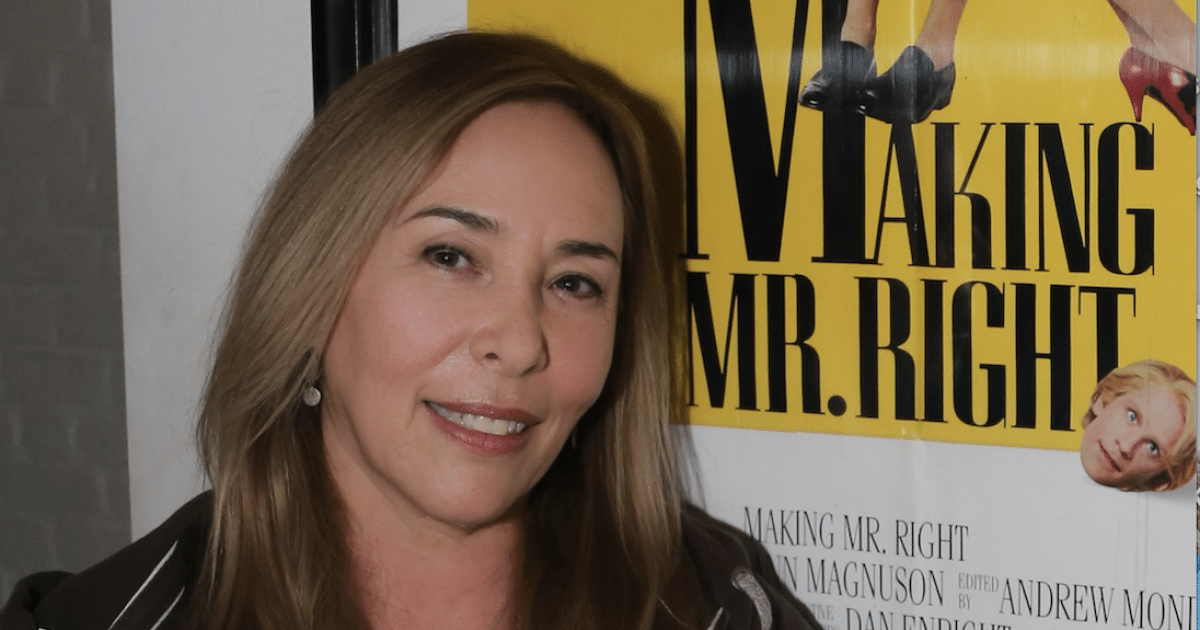
Susan Seidelman, the director of movies and television shows, has always championed what she terms as the chaotic fight. Famous for her feminist film, “Desperately Seeking Susan” from the 80s, which is preserved in the National Film Registry, Seidelman has a knack for trusting her instincts to lead her to success. However, this does not imply that she stumbled upon her career out of sheer luck or whim. As a woman, there wasn’t much room for error. She had to work hard and exhibit an ability for what she describes as “aesthetic playfulness” to pave her way to greatness.
This strategy has led to a distinctive career filled with daring explorations, both within and outside the Hollywood machinery. In 1982, she sparked the indie film movement with her first film, “Smithereens”, and later became one of the few female directors to operate consistently in Hollywood. Seidelman, based in upstate New York, asserts, “I’m not goal-driven, but I’m extremely resolute.”
Such was her approach to writing her first book, “Desperately Seeking Something: A Memoir About Movies, Mothers, and Material Girls”, released on June 18. The idea of detailing her public and private life was merely a theoretical consideration, something she planned to do later in life. However, “later” came in 2020 when the pandemic halted her work on projects, providing her with ample time to write.
The COVID-19 pandemic was challenging for her. Two weeks into the lockdown with her partner, Jonathan Brett, Seidelman learned about the death of actor Mark Blum, featured in “Desperately Seeking Susan”, from virus complications.
Blum’s death, one of the earliest in their filmmaking community, struck her hard. “I also turned 70 and was starkly reminded of my mortality,” she recalls. After a lifetime of progression, she decided it was high time to reflect upon her journey.
“Writing a book scared me as I’m a visual person,” she admits. “I can script dialogues, but a book? Then, the pandemic struck, and I had time to brainstorm, and slowly things began to fall into place.”
To organize her thoughts, Seidelman relied on her iPhone: “I discovered my Notes app and began jotting down stories that way.” Within a week, she had 100 stories, and a few months later, she had accumulated 1,000. “The process turned out to be similar to film editing,” she explains. “I downloaded all the notes and rearranged them to see where they led me.”
This was her chaotic struggle, but it wasn’t anything new for her. During the Reagan era, Seidelman was the antithesis of the typical Hollywood film director persona. “I’m under 5 feet,” she remarks. “Whenever I entered a studio executive’s office, they were taken aback. So, I had to overcome that because no directors looked like me.”
“Desperately Seeking Something” highlights the evolution of American cinema over the past 45 years, as seen through Seidelman’s unique career. When she, a fresh graduate from New York University’s film school, scraped together funds to finance “Smithereens”, her ambition was solely to direct. However, the film’s raw energy struck a chord with audiences, turning it into an art-house sensation.
“Smithereens” was also showcased at the Cannes Film Festival, becoming the first independent film to compete there. Thus, Seidelman inadvertently sparked the New York indie film wave that would later bring us talents like Jim Jarmusch, Spike Lee, and Bette Gordon.
As a young cinema enthusiast, Seidelman recalls only watching one film directed by a woman: Elaine May’s “A New Leaf”. This was in Philadelphia in 1969 when she was a high school senior and her guidance counselor had her take an aptitude test to determine her career path. “The test suggested I should be a librarian,” Seidelman writes. “Initially, I was appalled. … What I didn’t realize was that the test was correct. A librarian loves stories — and so did I.”
After the success of “Smithereens”, Seidelman got the opportunity to direct a Hollywood film. “Desperately Seeking Susan”, a film about a bored New Jersey housewife (Rosanna Arquette) who suffers amnesia and assumes the identity of an East Village socialite (Madonna), was written, produced, and directed entirely by women — a rarity at that time. The comedy coincided with the rise of Madonna’s pop career and became a box office success and cultural sensation.
Seidelman believes that “Desperately Seeking Susan” would have been a drastically different film without women producers and writers. “I related to both of the characters, so it felt natural to make that film.”
Riding on the critical and commercial success of the film, Seidelman signed a four-picture deal with Orion Pictures, a milestone for a female director. She was also involved in the early days of HBO, directing the pilot of “Sex and the City” and several anthology series for the cable network and Showtime, at a time when Hollywood had made some progress in hiring female directors.
As an undergraduate, Seidelman didn’t aspire to become a director. However, during her junior year as a fashion design major at Drexel University, she took a film appreciation class that changed everything. The course introduced her to the great European auteurs like Bergman, Antonioni, Varda — teaching her character development, narrative flow, and the endless toolbox of cinematic storytelling.
From the beginning, Seidelman wanted to create films featuring strong female leads who navigate their way towards self-discovery, an alternative concept in an industry dominated by male narratives. Undeterred, Seidelman continued to explore themes of female ambition and power. Her 1987 film “Making Mr. Right” was a subtle reversal of “build a perfect girl” films like John Hughes’ “Weird Science”. However, Seidelman faced criticism from male critics who were uncomfortable with “the idea of a woman abandoning human men to find satisfaction with a programmable ‘sex-bot.’”
Seidelman asserts, “Most of the top critics were men. There was an intentional or unintentional sexist bias.” “Making Mr. Right” lost money at the box office initially but has since gained popularity among younger viewers.
Seidelman’s new memoir serves as a guide on staying true to your craft without compromising your integrity, especially within the cutthroat environment of Hollywood.
“Writing the book during the pandemic, when the world seemed like a science-fiction movie, was terrifying,” she admits. “However, with age comes wisdom, and I felt I had finally achieved enough distance from my life without having to deal with all the emotional baggage of youth, like when you read a harsh review of your film at 37, and it devastates you.”
Similar posts:
- Sydney Sweeney Exposes ‘Fake’ Hollywood Girlbosses Not Truly Supporting Women!
- Unbelievable! Daniel Craig Reconsidered + LA’s Must-See Movies This Week!
- Shocking News: ‘Grease’ Star Susan Buckner, Famous for Playing Cheerleader Patty Simcox, Dead at 72!
- Don’t Miss Out! Don’t Knock the Rock Fest Returns, Plus LA’s Hottest Films This Week!
- Unleash Your Superpower with Miranda July’s Life-Changing New Novel for Women!

My name is Alex Carter, a journalist with a deep passion for independent cinema, alternative music, and contemporary art. A University of California, Berkeley journalism graduate, I’ve honed my expertise through film reviews, artist profiles, and features on emerging cultural trends. My goal is to uncover unique stories, shine a light on underrepresented talents, and explore the impact of art on our society. Follow me on SuperBoxOffice.com for insightful analysis and captivating discoveries from the entertainment world.