
The documentary “New Wave” begins with distressing footage of war — combat, gunshots, children being sheltered, individuals escaping Vietnam for safety in America. This is the familiar portrayal of war’s gruesome reality.
However, unexpectedly, the historical footage of Saigon’s final days is infused with rhythmic beats and captivating synth sounds. This period was marked by the US government’s intervention to relocate over 120,000 refugees to military bases in 1975, saving them from the devastating aftermath of the conflict that still affects lives today.
Elizabeth Ai, the filmmaker who was expecting a child during the project’s inception, struggled with how to illuminate stories about her cultural heritage for her forthcoming child. Then she remembered some tunes from her past. “Growing up in the ’80s, I was greatly influenced by the teenagers who raised me — my parents were not around, and these teenagers, my aunts and uncles, stepped in.
“While pondering on what I would pass on to my daughter,” Ai recalls, “the music of the new wave era struck me — it was a significant part of my earliest and cherished memories. Furthermore, the general American understanding of the Vietnamese experience was mostly limited to violent Vietnam War movies or stereotyped portrayals. I thought it was time to challenge the narrative and shed light on an underrepresented subculture.”
Thus, “New Wave” came into existence. The film is set to be shown at Laemmle Glendale from Friday through Oct. 31.
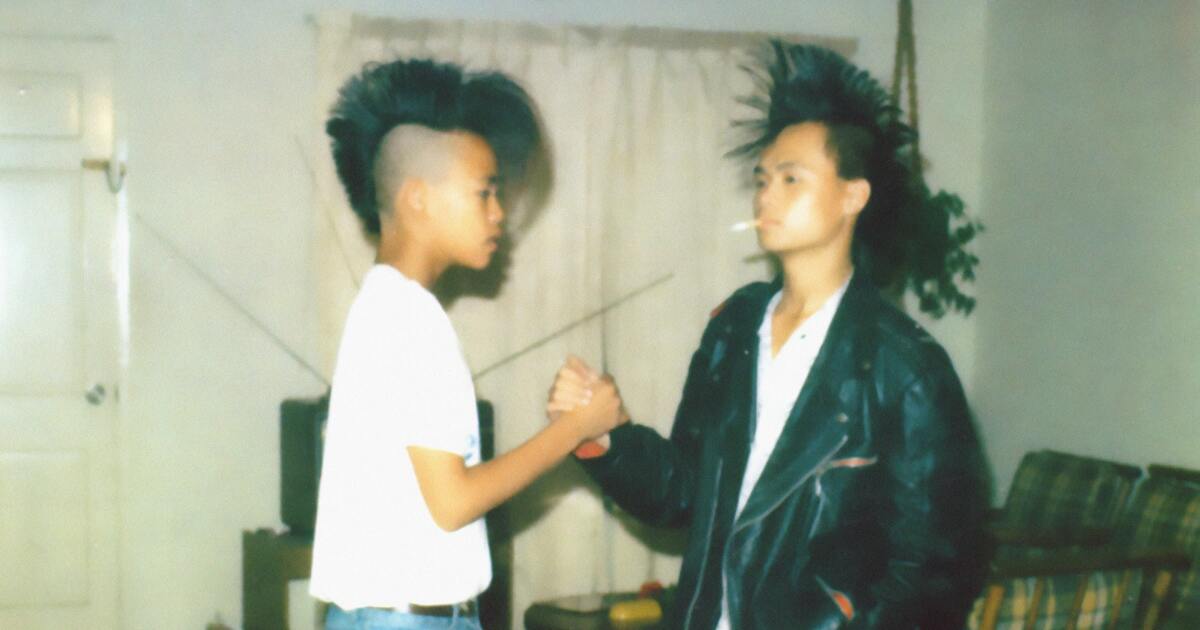
Be prepared for towering hairstyles, kitschy tracks, and youthful revolt. Ai embarked on a quest to unearth the untold story of punks in the tumultuous world of Vietnamese New Wave, unveiling a profound cultural truth in the process.
“The generations before me were perpetually on the move,” Ai, the director, narrates at the start of the film. In a Zoom interview, the 44-year-old Ai likens refugees to “escape artists.” As she delved into the lives of her relatives and the trailblazers of the New Wave scene — not the mainstream icons like Blondie or Billy Idol, but a separate cadre of Vietnamese artists — she uncovered a web of shattered dreams and unfulfilled aspirations. She identifies them as “not just transient acts of teenage rebellion, but bold resistance against the persistent remnants of war and the sacrifices of a generation striving to start anew.”
“New Wave” juxtaposes the memories of Ai’s aunts and uncles clandestinely attending underground clubs in Southern California with her own disjointed childhood, marred by the absence of her parents. Ai spent six years working on her directorial debut before its world premiere at the Tribeca Film Festival last June.
Although this music genre is known as “new wave” in Vietnam, the rest of the world labels it Eurodisco. The electronic beats, the punk-goth aesthetics, the sounds of keyboards and drum machines — these musical elements symbolized a period of nostalgia as well as revolution.
“The term ‘refugee’ — it revives all the memories that I wish to forget,” stated Ian Nguyen, a DJ and concert producer who’s one of the film’s main interviewees. As an innovator who popularized the New Wave music by playing it for audiences back then and even now, he compares its sounds to those of Depeche Mode and OMD.
In the documentary, Nguyen guides viewers through his own strained relationship with his father, the late Nguyen Mong Giac, one of Vietnam’s renowned writers, who attempted to establish a more stable life in Orange County. He was strongly against his son’s career choice.
These contrasting viewpoints play out against a backdrop of jerky, sensual rhythms and intense feelings. For the younger generation like Nguyen, the music was a cultural metamorphosis, an awakening that propelled them to rebel, flee from traditional homes to find refuge in motel rooms and to navigate through passionate relationships. However, to their elders, the amplified noise was far from the karaoke songs they were accustomed to.
Ysa Le, the executive director of the Viet Film Fest, where “New Wave” premiered on the West Coast earlier this month (winning the grand jury’s best feature award), was captivated by the documentary.
“It tells a story about family, about generational trauma, and it’s a narrative we need to bring to the forefront,” she comments. “It’s our journey and it will prompt many people to consider the dialogues in the film between grandparents, parents, and children, and the importance of having these conversations before it’s too late.”
At the three-day film festival she founded in 2003, dedicated audiences filled two sold-out Santa Ana theaters to watch the film, queued up for Ai to sign copies of its companion book, “New Wave: Rebellion and Reinvention in the Vietnamese Diaspora,” published by Angel City Press and the Los Angeles Public Library. The hardcover includes photos and essays from distinguished Vietnamese scholars and celebrities.
An accountant in the crowd purchased five copies, planning to send the book to his nieces and nephews in the Midwest. Taylur Ngo, a writer from San Diego, left the screening feeling inspired.
“I commend the women filmmakers,” she expresses. “They are the ones delving into family secrets. They are tackling family life and domestic issues in a very nuanced and sensitive manner. They are not afraid to challenge the matriarchy or patriarchy in a film that’s beyond music.”
“I believe it’s time for us to venture into households and uncover what’s intricate and concealed,” Ngo adds.
As a mother of two, she says she has listened to the fundamental singers of New Wave, though it was “slightly before my era. However, I was unaware of its rebellious aspect, and how it aided the 1.5 generation” — those who migrated to a new country as a child or teenager, yet possess characteristics of both first- and second-generation immigrants — “in understanding their identities.”
Among the pop idols of the New Wave movement, Lynda Trang Đài stood out, often referred to as the “Vietnamese Madonna.” With her signature “Jump in My Car” hit, she enthralled audiences.
Her bold stage presence in a series of glamorous Paris by Night videos, her form-fitting body suits and bikini tops, her audacity and alluring voice left the older generation in shock. Her performances ignited the spirit of youth, encouraging fans to break away from traditional Vietnamese norms. Crowds flocked to Đài’s shows dressed in denim, leggings, and neon tees, adorned in Aqua Net.
“I suppose I was destined to be a New Wave singer — and to play a significant role in it. That’s my entire career,” Đài, 56, says over the phone, during a break from Lynda Sandwich, the popular Westminster sandwich restaurant she operates. “The music is truly special because it captured a time when Vietnamese Americans had succeeded in the American music scene. There were moments of joy and regret. There was the fashion and cars that accompanied it.
“One must remember that in ’75, when people had just arrived, we had limited options. They simply listened to traditional Vietnamese songs.”
Then, Đài, Tommy Ngô (her husband), Trizzie Phương Trinh, Tuấn Anh, and others entered the scene. As the New Wave brand expanded, along with VHS tape sales, so did California’s Little Saigon, the cultural and entertainment center behind it.
“Yes, there was displacement and trauma, but they created music — they had fun. This was my tribute to the people who raised me,” Ai states. “I only have one opportunity to make my first film, and I truly wanted it to convey a message. That’s when the real exploration began.”
The genre’s music continues to resonate with a captivated generation — a testament to the enduring quest for a sense of belonging, a desire yet to be fulfilled.
Similar posts:
- Vietnamese Reaction to ‘The Sympathizer’s War Depiction – What They REALLY Think!
- Unbelievable! L.A. Film Fans Get Exclusive Access to Best Films from Global Festivals at AFI Fest!
- Norman Reedus HATED Filming These Scenes with Jeffrey Dean Morgan in The Walking Dead!
- Anita Pallenberg: The Untold Story of the Ultimate Rock Muse in ‘Catching Fire’ – You Won’t Believe It!
- Unbelievable! The Untold Musical Success Story of One Family in ‘Unsung Hero’ Revealed!

My name is Alex Carter, a journalist with a deep passion for independent cinema, alternative music, and contemporary art. A University of California, Berkeley journalism graduate, I’ve honed my expertise through film reviews, artist profiles, and features on emerging cultural trends. My goal is to uncover unique stories, shine a light on underrepresented talents, and explore the impact of art on our society. Follow me on SuperBoxOffice.com for insightful analysis and captivating discoveries from the entertainment world.