
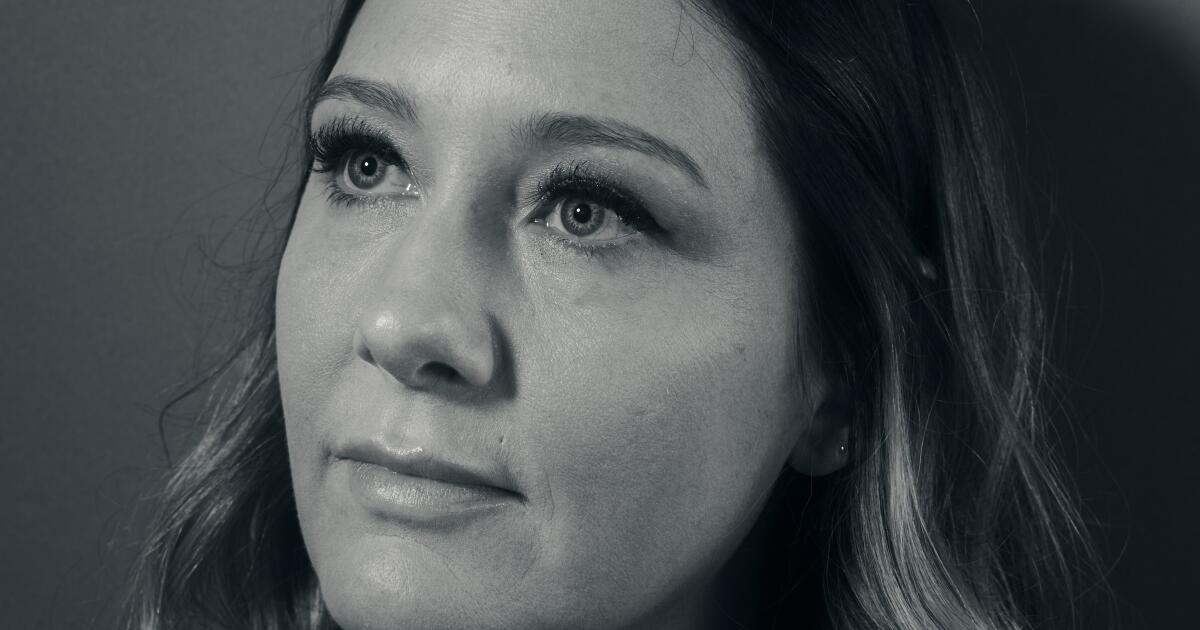
For director Erica Tremblay, “Fancy Dance” has already earned the greatest reward.
The moment she presented the film to an audience of Cayuga-language speakers in Toronto last year, an elder gripped her cheeks and told her “well done” in Cayuga.
“Some were moved to tears because they are in their 80s and 90s and had never before seen their language portrayed in a movie,” Tremblay shares. “For me, that’s the highest honor the film has received.”
“Fancy Dance,” which will be available in select cinemas from Friday before hitting Apple TV+ on June 28, follows the story of Jax (played by Lily Gladstone) and her teenaged niece Roki (Isabel Deroy-Olson), who she has been looking after since Roki’s mother vanished. As Jax simultaneously searches for her missing sister and helps Roki prepare for an upcoming powwow dance, officials arrive to remove Roki from the reservation and place her with her white grandfather.
Correction:
5:38 p.m. June 24, 2024A previous version of this article incorrectly stated that “Fancy Dance” premiered at the 2021 Sundance festival. It actually premiered there in 2023.
Tremblay, 43, who co-wrote the screenplay with Tlingit writer Miciana Alise, directed “Fancy Dance,” the first narrative feature from the Seneca-Cayuga filmmaker. The film debuted at the 2023 Sundance Film Festival’s U.S. dramatic competition in Park City, Utah. “Fancy Dance,” like her 2020 short film “Little Chief” (which also included Gladstone), is set in and around the Seneca-Cayuga reservation in Oklahoma.
Tremblay, who has written and directed episodes of shows like “Reservation Dogs” and “Dark Winds,” says she found the inspiration for the film’s story during a three-year language immersion program studying Cayuga.
“At the time, we were learning family terms and I discovered that the word for mother is knó:ha’ and the term for your aunt on your mother’s side was knohá:’ah, which translates to ‘little mother’ or ‘other mother,'” Tremblay explains. “The significance of this beautiful matriarchy and matrilineal kinship was so vividly evident in the language, and that deeply moved me.”
Tremblay found a new way to connect with her culture through the Cayuga language’s vocabulary, grammar, and syntax. It also reminded her that her culture and its matriarchal perspective were not only thriving but were also not too far in the past.
“Fancy Dance,” through the tale of Jax and Roki, addresses the ongoing systemic issues impacting Indigenous women and their communities, like the crisis of missing and murdered women and the forcible removal of Native American children from their families. However, “Fancy Dance” primarily serves as Tremblay’s tribute to her culture and the Cayuga language.
“The realization that the film will soon be accessible worldwide and that the Cayuga language will be heard around the globe is just dawning on me,” she shares in a recent Zoom video chat. “This is a significant milestone. So I’m feeling a mix of pride and gratitude, emotions I often struggle to allow myself to feel.”
Tremblay goes on to discuss the Cayuga dialogue in “Fancy Dance,” the issues the film tackles, and her hopeful outlook for the industry’s future. The conversation has been edited for length and clarity.
Why did you decide to incorporate Cayuga in this film?
Our language, Cayuga, is at a point where there are fewer than 20 native speakers remaining. That is alarming. It’s almost considered extinct as a language. I’m not a fluent speaker. I will always be learning the language. But I have some knowledge of the language, and you can’t just keep that to yourself. It feels like a responsibility to me that, because I had the privilege of studying in a language immersion program, I have to do my part to pass it on.
The relationship between Jax and Roki is central to the film. I particularly enjoyed the ordinary moments they shared — moments of happiness, like when Roki gets her first period.
It was crucial to include moments of joy and lightness because that’s what my community feels like. I know so many Jaxes. I was brought up by Jaxes, and without these women and queer individuals in my life, I wouldn’t be here. It’s through laughter and connection that you can transcend all the things that are happening.
All of my nieces and my nephew have had their periods. My youngest niece just got hers last month. It’s a joyous event for us Haudenosaunee people. When [Roki and Jax] go to the diner and she orders all the strawberry dishes, it reminded me of when I got my period and we went to a Chinese buffet and I ordered sweet and sour chicken and other dishes. We don’t celebrate menses enough.
I’m always pleased to see cultures that celebrate periods because it often seems like there’s a strange sense of shame or embarrassment around it.
It’s tragic because there is. In our culture, there are certain things you can and cannot do when you’re on your period. It’s not shameful. When you’re menstruating, there are certain things you’re not allowed to be near or go around because you’re so powerful that you can disrupt them. Anthropologists attempted to distort that, but it’s in the language, the ceremonies, the culture. I’m much more excited about accepting that than any sort of shame. I’m signing up for: I’m at my most powerful.
How did you balance these important topics with creating entertainment?
Miciana and I wrote and produced this film for Native people. We wanted the film to be a native-made film about native people. When Native people watch this, they’ll see things represented accurately and authentically that will make them proud and that they can identify with. So, first and foremost, our responsibility when making the film was to Native people and to avoid re-traumatizing or triggering Native people when they watch the film.
For the non-Native audiences who will discover this film, we wanted to be able to discuss issues occurring in Indian country in the hope that viewers can be led to these topics by channeling humanity rather than being bludgeoned over the head with them. Everyone on this planet can identify with the themes of love, loss, and grief. Hopefully, through the ebb and flow of [Jax and Roki’s] love, audiences will recognize these systemic issues impacting Native people in modern times and will reflect on their relationship with these systems.
Recently, it feels like there has been more focus on Native projects — like “Dark Winds” and “Reservation Dogs”. What has it been like for you to witness and experience that growth? Has the momentum stopped?
I’m profoundly grateful for Sierra Ornelas of “Rutherford Falls” and Sterlin Harjo [of “Reservation Dogs”] and Sydney Freeland [of “Echo”] and all these incredible showrunners and directors who are working and are my mentors. They’re pushing against all odds, which is so inspiring. It allows you to envision yourself in that role, to see yourself as a storyteller who can do this job for a living and that you can create stories about communities that you care about.
You can’t be sure if this is just a fleeting moment that Hollywood is having that will soon revert. With all the strikes and everything that happened, we’re still trying to regain our footing. What is the new Hollywood? What are the impacts of AI that are coming? All of this is very anxiety-inducing.
On these sets, it’s really tough. I often find myself being the only woman on a tech scout. You might be working with collaborators who don’t want to listen to you because you’re a woman or you’re Indigenous, or they just have this idea that you don’t have as much knowledge. That is very much still happening, and it f— sucks. But I am optimistic that things are moving in the right direction.
But the question remains: How can you compensate for over 100 years of truly abhorrent behavior in, like, three TV seasons? Hollywood studios will have to invest a lot more to make up for the bad behavior that has existed for so long and continues to this day. I always challenge these studios and these companies: You can’t just make verbal commitments. You have to actively do things.
What that truly means is cutting checks. You have to actively employ people with money. These mentorship programs are great, but you have to hire these people, pay them, and invest in their pitches and their ideas. These institutions need to provide more active support, and we’re slowly seeing that happen. But we need more of that for this to not just be a fad. So ask me this question again in five years.
Your optimism is admirable.
I believe that as an industry, we’re all just holding on and hoping that we can turn things around. My mother always taught me to be optimistic while also recognizing reality. I think we can be optimistic and at the same time call out bad behavior from the studios and these systems. I want to work with them and I get excited when I do. Look at a show like “Reservation Dogs” — that’s a great example of how great work can come from these relationships, and I’m excited to see more of that.
And I feel like my optimism is a trait that I learned from the Jaxes in my life. When you consider Jax and Roki, the only way they can get past what they’re facing is because they are optimistic and they love each other. They understand that they can navigate through life as long as they rely on each other. I feel the same way about the work that Sterlin, Tazbah [Chavez], and all these amazing filmmakers are doing. The only way we get to the other side of this is by linking hands and doing it together. And that comes from being inspired by these incredible Native people that I know and love who are enduring so much more.
When I return home [to the Seneca-Cayuga reservation], there’s a person missing. That’s a much bigger f— deal than not getting a job in Hollywood. But it’s through laughter, love, humanity, and holding hands that we get to the other side of it. We’re going to survive Hollywood. We’ve survived way worse.
Similar posts:
- Shocking Truth Unveiled: Native Women – Both Heroes and Victims in Haunted ‘Fancy Dance’
- Unstoppable Irish Rap Trio Kneecap Reveals Their Shocking Story – It’s a Must-Read!
- Netflix’s Newest Starlet is Stealing Hearts in Her TV Debut – You Won’t Believe Who!
- Shocking: Inmates Reunite with Kids for One Night in ‘Daughters’ – A Tear-Jerker Review!
- Unprecedented Real-Time Biopic on Irish Rapper Sensations ‘Kneecap’ – You Won’t Believe It!

My name is Alex Carter, a journalist with a deep passion for independent cinema, alternative music, and contemporary art. A University of California, Berkeley journalism graduate, I’ve honed my expertise through film reviews, artist profiles, and features on emerging cultural trends. My goal is to uncover unique stories, shine a light on underrepresented talents, and explore the impact of art on our society. Follow me on SuperBoxOffice.com for insightful analysis and captivating discoveries from the entertainment world.