
The gripping, sharp tales of Flannery O’Connor, steeped in the unrefined South and its redemption-lacking misfits, will continue to jolt us with their stark violence, wit and brutal honesty.
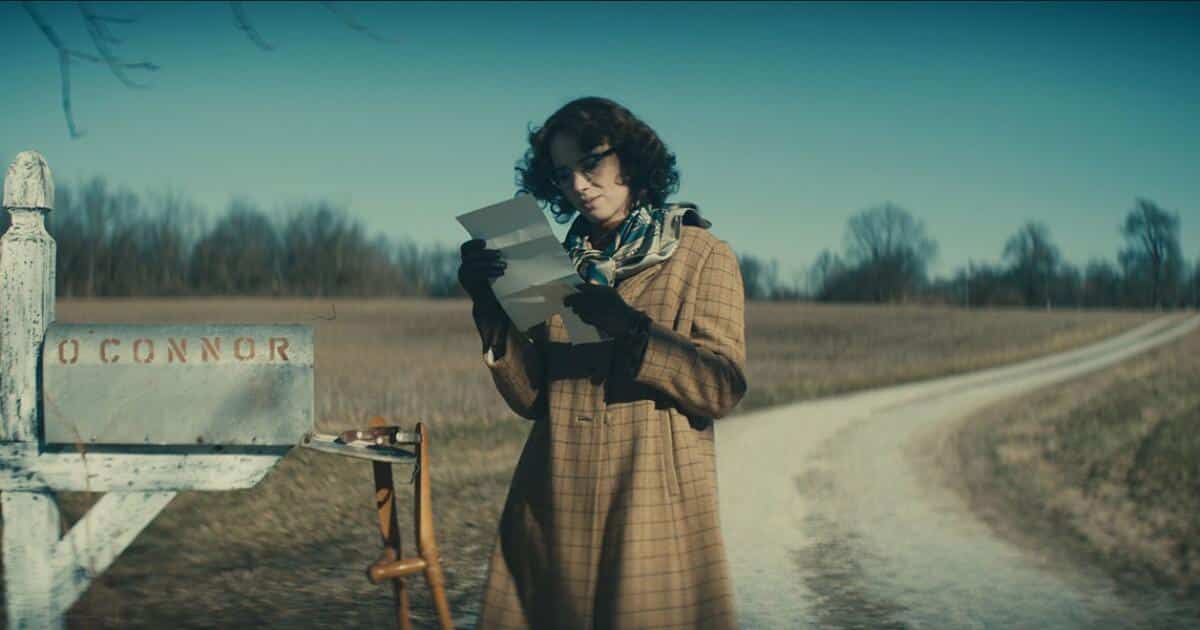
Such multi-dimensional and profound artists don’t merit the superficial life-to-death representation often found in numerous biopics. Thankfully, Ethan Hawke’s latest film, “Wildcat,” doesn’t follow this path. Instead, it offers a thoughtful, sharp and out-of-the-box exploration of the enigmas of the deeply religious, rule-breaking Georgia-born author’s life and work. The film focuses on a crucial period of promise and disappointment in O’Connor’s 20s, when her writing was gaining recognition (alongside her lupus diagnosis that would eventually take her life). It features a heart-rendingly smart performance by Hawke’s daughter Maya (“Stranger Things”), who is almost unrecognizable in her severe guise with cat-eye glasses and a delicate demeanor.
The Hawkes present a depiction of O’Connor in all her fiercely self-aware isolation, whether she’s staunchly opposing a patronizing New York editor (Alessandro Nivola) who thinks she wants to “pick a fight” with her audience or sternly defending her faith against flippant remarks at an Iowa Writers’ Workshop party. We also witness this O’Connor in vulnerable moments, diminishing in the presence of her overprotective mother, Regina (Laura Linney), when forced to return home due to her illness, and nearly breaking down in front of a priest (a superb Liam Neeson). Ethan Hawke’s script, co-authored with Shelby Gaines, took inspiration from the letters to God that O’Connor wrote during this time, which were posthumously published as “A Prayer Journal” in 2013.
This phase of aspiration and setback from a tragically brief life is not the only thing depicted in “Wildcat.” Maya Hawke also takes on the role of various O’Connor characters in condensed dramatizations of short stories like “The Life You Save May Be Your Own,” “Parker’s Back” and a few other classic pieces. In the ones where audacious, brusque men wreak havoc and bring transformation to unsuspecting young women (all portrayed by Maya), actors like Steve Zahn, Rafael Casal, and Cooper Hoffman deliver memorable performances.
These segments deviate in tone, color, and pace from the subdued palette and stationary compositions that cinematographer Steve Cosens uses for the biographical narrative. However, they’re expertly woven in, illustrating how an isolated creative mind can experience bursts of creativity when world unveils itself. Films often grapple with depicting the spark of writing, but these vignettes genuinely embody a powerful O’Connor quote that Hawke starts with: “I’m always irritated by people who imply that writing fiction is an escape from reality. It is a plunge into reality and it’s very shocking to the system.”
Linney, in top form, is another recurring presence in multiple roles, vividly portraying a few of O’Connor’s fictional mothers (including the self-righteous women from “Revelation” and “Everything That Rises Must Converge”). Before she even appears as the composed, traditional Regina, picking up her ailing daughter at the train station, we’ve seen her in a couple of these adaptation bursts (including a clever rendition of “The Comforts of Home” as a trailer for a sensational ’60s B movie).
Surprisingly, the dual roles of Linney and Hawke never seem like a cheap psychological analysis of the writer’s complicated relationship with a parent who didn’t understand her. It feels more expansive than that. (Simultaneously, O’Connor’s personal views on race, which have sparked much reputational reassessment, aren’t fully exposed here, but they’re not overlooked either.) Ethan Hawke’s ingenious use of his daughter and Linney helps us understand both the intense specificity of O’Connor’s themes as well as the abundant adaptability within her gothic archetypes.
Following director Ethan Hawke’s outstanding docuseries “The Last Movie Stars,” about Paul Newman and Joanne Woodward, “Wildcat” demonstrates that his talents aren’t limited to acting, but extend to behind the camera as well, particularly when the subject is a life intricately intertwined with art, fervor and suffering.
Similar posts:
- Shocking Twist: Suri Dumps Tom Cruise’s Last Name for Graduation He Skipped!
- Iconic Western Gets a Remake After 65 Years by Heroes’ Creator – Unbelievable!
- Unseen Fame: How the Limelight Found This Unique Italian Director!
- We’ve Binge-Watched Stranger Things Season 5, Volume 1! You Won’t Believe What Happens!
- Netflix’s Top Sci-Fi Show Returns in 2025: The Must-Watch Event You Can’t Miss!

My name is Alex Carter, a journalist with a deep passion for independent cinema, alternative music, and contemporary art. A University of California, Berkeley journalism graduate, I’ve honed my expertise through film reviews, artist profiles, and features on emerging cultural trends. My goal is to uncover unique stories, shine a light on underrepresented talents, and explore the impact of art on our society. Follow me on SuperBoxOffice.com for insightful analysis and captivating discoveries from the entertainment world.