
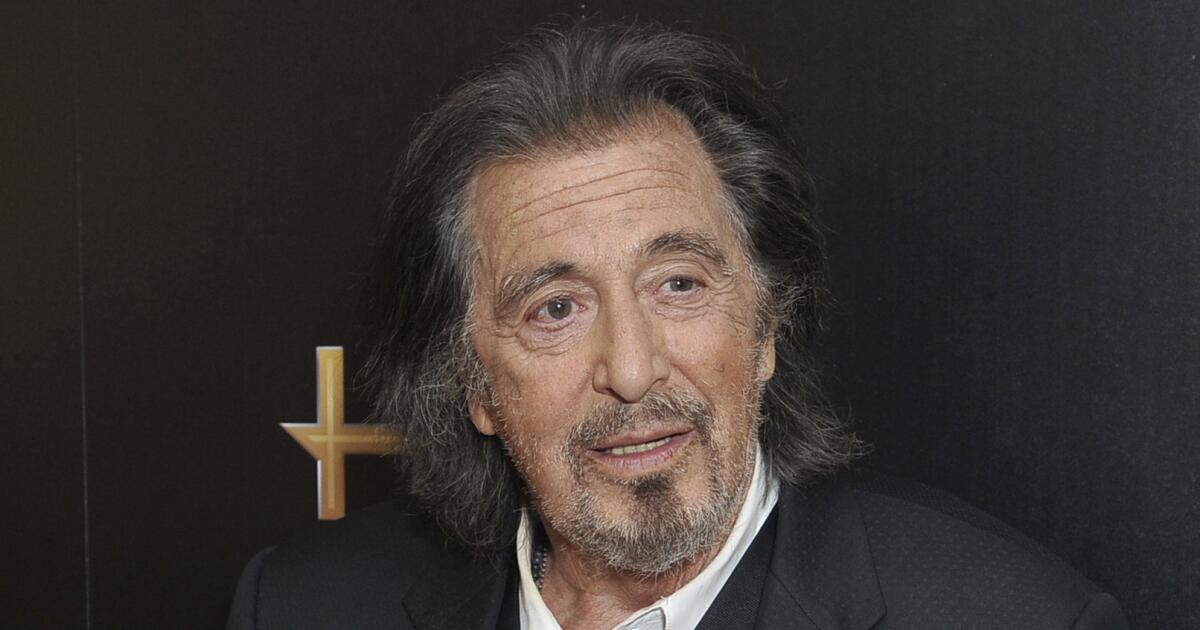
- With a journey from humble beginnings to introspection at 84, Al Pacino delves into his life with a unique charisma.
- The actor seeks to clarify the reason he missed the 1973 Academy Awards, when he was in the running for ‘The Godfather.’
Al Pacino spent his childhood navigating the streets of the South Bronx with a band of friends, engaging in whatever mischief they could find. His recent memoir, “Sonny Boy,” depicts his group as “a wild, adolescent wolf pack with cunning grins,” and shares the unfortunate fate of his three closest pals, Cliffy, Bruce, and Petey, who succumbed to heroin overdoses. Pacino’s addiction was limited to his screen roles, most notably in his 1971 film debut, “The Panic in Needle Park.” He readily admits that art was his savior.
This thoughtfully introspective book raises a string of related queries: Why did I survive when so many others perished? Why can’t I simply hone my skills and avoid the fame and celebrity aspect?
Despite being voted most likely to succeed in junior high school, he pondered its irrelevance: “Did it mean anything more than a lot of people knowing your name? Who desires such recognition in the first place?” He later muses: “At some point, dealing with fame becomes a self-preoccupied issue and it’s best to remain silent about it. As I’m currently discussing it, perhaps I should heed that advice.” Fortunately, he has too much to share to stay quiet.
At 84, Pacino, who co-authored “Sonny Boy” with art journalist and writer Dave Itzkoff, no longer needs to be concerned about upsetting potential employers. He shares creative clashes with directors, including Norman Jewison (“And Justice for All”) and Arthur Hiller (“Author! Author!”). A caption accompanying a photo of an exasperated Pacino in “Justice” reads: “I want to quit this movie!”
But Pacino isn’t one for scandalous gossip. He presents himself as a New York theater actor with a fierce dedication to the mysteries of his trade, enamored with the art (and, for a significant time, alcohol and drugs), and unwilling to embrace the fame that came with the blockbuster success of “The Godfather” in 1972. Not being one for practicality, he took a hiatus from films during the ’80s — “I began to question the very essence of what I was doing and why I was doing it” — and found himself penniless in 2011, writing, “I had fifty million dollars, and then I had nothing.”
As his voice is so familiar from numerous movie roles, it almost feels like he’s narrating his own tale in classic Pacino fashion — the righteous renegade cop of “Serpico” (1973), or the slick, predatory real estate agent of “Glengarry Glen Ross” (1992). This is part of why we are drawn to film stars, even those who would prefer to be something else. We feel as if we know them. Pacino’s extensive body of work, which includes the “Godfather” series, “Dog Day Afternoon” (1975), “Scarface” (1983), “Sea of Love” (1989), “The Insider” (1999) and “The Irishman” (2019), makes reading “Sonny Boy” feel like a journey through the history of American cinema over the past 50 years.
However, the book may leave readers wishing for more insight into specific favorites. Michael Mann’s “The Insider,” which I consider one of the finest films of the last fifty years, barely gets a mention. “Glengarry” also gets minimal attention. Come on, Al. Always Be Closing.
Still, the peculiar nature of “Sonny Boy” adds to its allure, and the book’s unique voice is a testament to the successful partnership between Pacino and Itzkoff, the first person Pacino acknowledges: “His considerable assistance and tenacity helped me explore paths I never would have taken.”
The pages are filled with sorrow for his largely absent father, his deeply depressed mother, his deceased childhood friends, and the poverty and uncertainty that shaped his early years. There are also moments of revelation, like when a theater group performed Chekhov’s “The Seagull” at Pacino’s favorite movie theater when he was 15, sparking a passion in him. “Chekhov became my companion,” writes Pacino, who was known for wandering the streets of New York reciting his favorite theatrical monologues aloud.
Pacino contemplates the fate of his friends who fell victim to drugs, wondering: “Why didn’t I end up that way? Why am I still here? Was it pure luck? Was it Chekhov? Was it Shakespeare?” He gives an implicit answer when he addresses ambitious actors who question why he made it while they didn’t: “You wanted to. I had to.”
If you’re more interested in industry gossip, Pacino attempts to cater to that as well. He recently learned of a longstanding rumor that he didn’t attend the 1973 Oscars because he was nominated for a supporting role rather than a leading role for “The Godfather.” He provides a far simpler reason: he was terrified. “It sheds light on the discomfort I felt when I visited Hollywood for work,” he writes. This might also explain why he didn’t win his first (and only) Oscar until 1993 for “Scent of a Woman,” a performance that was far from his best. (He has been nominated nine times.) He briefly touches on his various Hollywood romances, including Jill Clayburgh, Tuesday Weld, Diane Keaton and Marthe Keller. Pacino admits to being a workaholic, a trait that hasn’t always been beneficial in his personal life. He does, however, come across as a dedicated father to his three children.
“Theatre people are nomads, wandering gypsies,” he writes. “We are always on the move.” Despite his movie stardom, Pacino makes it clear that he is, fundamentally, a theater person. The two-time Tony Award winner is an artist who happens to have the career of a celebrity. He presents a compelling case for himself as an outsider who forced his way into the party, driven by the work above all else. Is this a self-serving depiction? Maybe. But most celebrity memoirs are. At least “Sonny Boy” also contains what feels like genuine self-effacement along with the familiar Pacino bravado.
Similar posts:
- Shocking Truth Unveiled: Al Pacino Almost Died From COVID-19, Had No Pulse!
- Godfather & Million Dollar Baby’ Producer, Albert S. Ruddy, Dead at 94! Oscar Winner’s Shocking Loss!
- Keanu Reeves, Sandra Bullock, Al Pacino headlining an Unforgettable Beyond Fest Experience!
- Shocking K-Drama on Netflix Tonight: A Social Thriller That Influencers Hate!
- Shocking Twist: Hitman’s Fading Memory Unleashes Unseen Chaos in ‘Knox Goes Away’!

My name is Alex Carter, a journalist with a deep passion for independent cinema, alternative music, and contemporary art. A University of California, Berkeley journalism graduate, I’ve honed my expertise through film reviews, artist profiles, and features on emerging cultural trends. My goal is to uncover unique stories, shine a light on underrepresented talents, and explore the impact of art on our society. Follow me on SuperBoxOffice.com for insightful analysis and captivating discoveries from the entertainment world.