
The 1981 film “The Final Conflict,” the third in the “Omen” series, concludes with the Antichrist character, Damien, gasping out “Nazarene, you have won … nothing,” before he collapses.
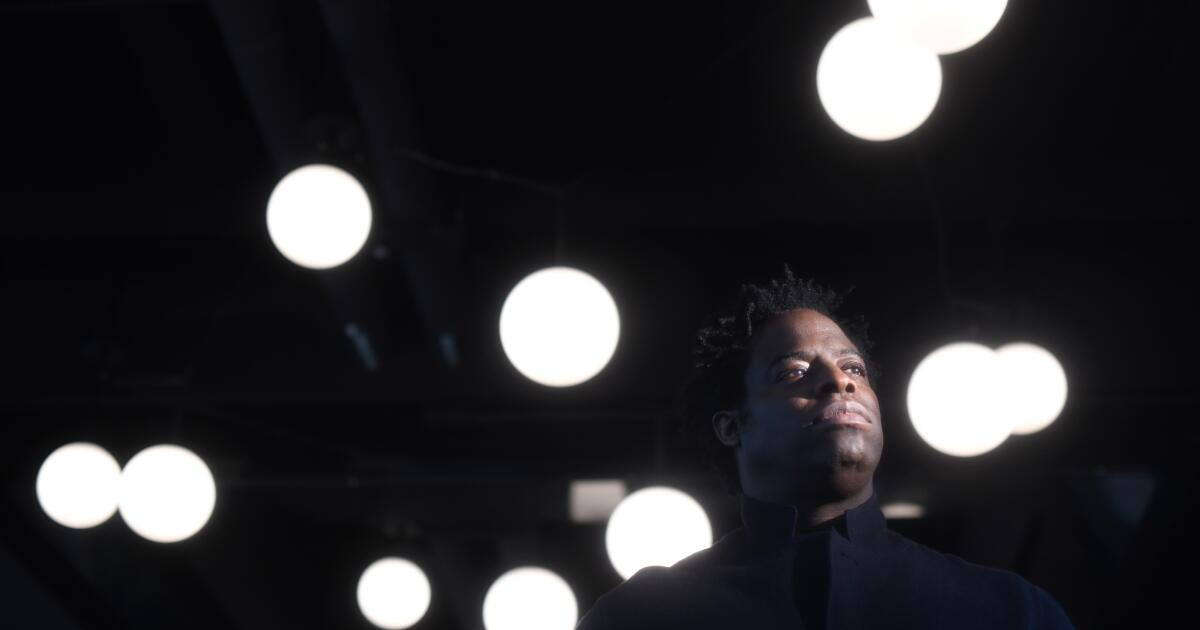
Jeymes Samuel, a West London native, was deeply impacted by this scene in his childhood, particularly by Damien’s reference to Jesus Christ as “Nazarene.” As a result, when Samuel wrote and directed his own biblical-era drama — “The Book of Clarence,” currently available on Netflix — he decided to end his film, a blend of comedy and serious drama, with the same word.
Samuel, speaking on a recent afternoon in West Hollywood, explains that using “Nazarene” in his film makes the message less overtly religious. “It’s a cry that speaks to all of us. But I think it’s about the hope that Clarence has at the end of the film.”
In the movie, Clarence, played by LaKeith Stanfield, is a character in a predominantly Black cast, who navigates the oppressive environment of Roman-ruled Jerusalem during the time of Christ. He rejects the idea of Jesus and starts performing his own imitation miracles, only to find his life endangered in a way that mirrors Jesus’ plight, forcing him to question his disbelief.
The song, “Nazarene,” which is played during the ending credits, is both a ballad and a type of prayer. In this original piece, Samuel, who also provides the vocals, sings about an impending storm and an aging man: “Old man time and his weathered hands / Must keep working for his tethered plans / Years fly by all too rapidly / Absent time with his family …”
Even now, Samuel is moved to tears when he hears these verses.
“It’s about the life we all lead,” Samuel explains. “Clarence chases his dreams and ambitions, but his flaw lies in not recognizing the important things around him. And I believe that’s true for all of us.”
Samuel, who is 45, is particularly thinking about his 9-year-old son who is in the U.K.
“We work for today, and Clarence strives for today,” he notes, “but it’s a two-edged sword. Because he knows he can fly — we know we can do these things — but at what cost?”
Samuel himself is a man who believes he can fly: He’s a multi-talented individual, being a multi-instrumentalist, singer, songwriter, composer, screenwriter, and director. He has an all-star hip-hop album (under the name The Bullitts) and two feature films to his credit — and he has a plethora of ideas, much like the literal lightbulbs that appear above Clarence in the film.
When he wrote and directed his debut feature, the offbeat western “The Harder They Fall,” Netflix was initially hesitant to let him also compose its music; under pressure, he met with several “established” Hollywood composers about collaborating. Eventually, partly due to pandemic-related delays, he composed the music himself — in addition to writing several original songs — resulting in one of the most daringly distinctive yet nostalgically retro orchestral scores in recent memory.
For Samuel, music is an integral part of storytelling; he conceives character themes as he’s writing the script, and his characters even hum those tunes in the film. His unique artistic voice — he’s a classic movie-loving nerd who is also a walking encyclopedia of all music genres and a close friend of Jay-Z and other hip-hop giants — is present in the dialogue, the dynamic and electrifying camera movements, and the notes in the soundtrack.
In “Clarence,” when John the Baptist recites a prayer, Samuel underscores every syllable with a flute. He created different themes for Clarence and his twin brother, Thomas (also played by Stanfield), and he had already planned out how he would pair various shots with lyrical orchestral swells that would pay tribute to epics like “Ben-Hur.”
He took the bold step of incorporating the sound of an analog Moog synthesizer throughout the score and on every song — he composed no less than 11 original songs for “Clarence” — as his “sly spice for the film,” as he phrases it.
He also wanted the same musicians’ touch on each song, even though they range from nouveau dub to R&B ballad to folk.
“The scale, the memory, the voices and all the musicians are the same — it’s all the same language,” he adds. “For me, it’s the language of Clarence, of this story.”
“Nazarene” begins with a chorus of voices (all Samuel), and the song is driven by acoustic guitars — one played by Samuel, the other by Marcus Eaton — and electric keys by James Poyser of the Roots, who also plays a Moog Sub 37 melody on the track. Andre “Dre” Harris, an experienced producer and drummer, keeps the beat, and the passionate, lyrical strings were arranged and conducted by Ben Foster.
Although the film includes characters getting high and cracking jokes, and Christian history is reimagined in unexpected and modern ways, at its core, “Clarence” is a heartfelt and emotional tale about family and faith in a frequently harsh world. It’s a unique blend of old-school cinema and contemporary soul.
So, in a sense, “Nazarene” encapsulates the entire movie — and the entirety of Jeymes Samuel — in a nutshell.
Similar posts:
- UK Legend Timothy West Dies at 90: His Passion for Waterways Will Shock You!
- Kristen Wiig Shocks Everyone: Leading Contender for Original Song at Next Oscars!
- Billie Eilish, Youngest Double Oscar Winner Ever! ‘Barbie’ Singer Makes History!
- Stallone & Samuel L. Jackson’s Missed Tarantino Film Meetup 28 Years Before Tulsa King!
- Tonight on Netflix: Watch This 4.1/5 Rated K-Drama Exposing the Truth of Korean Society!

My name is Alex Carter, a journalist with a deep passion for independent cinema, alternative music, and contemporary art. A University of California, Berkeley journalism graduate, I’ve honed my expertise through film reviews, artist profiles, and features on emerging cultural trends. My goal is to uncover unique stories, shine a light on underrepresented talents, and explore the impact of art on our society. Follow me on SuperBoxOffice.com for insightful analysis and captivating discoveries from the entertainment world.