
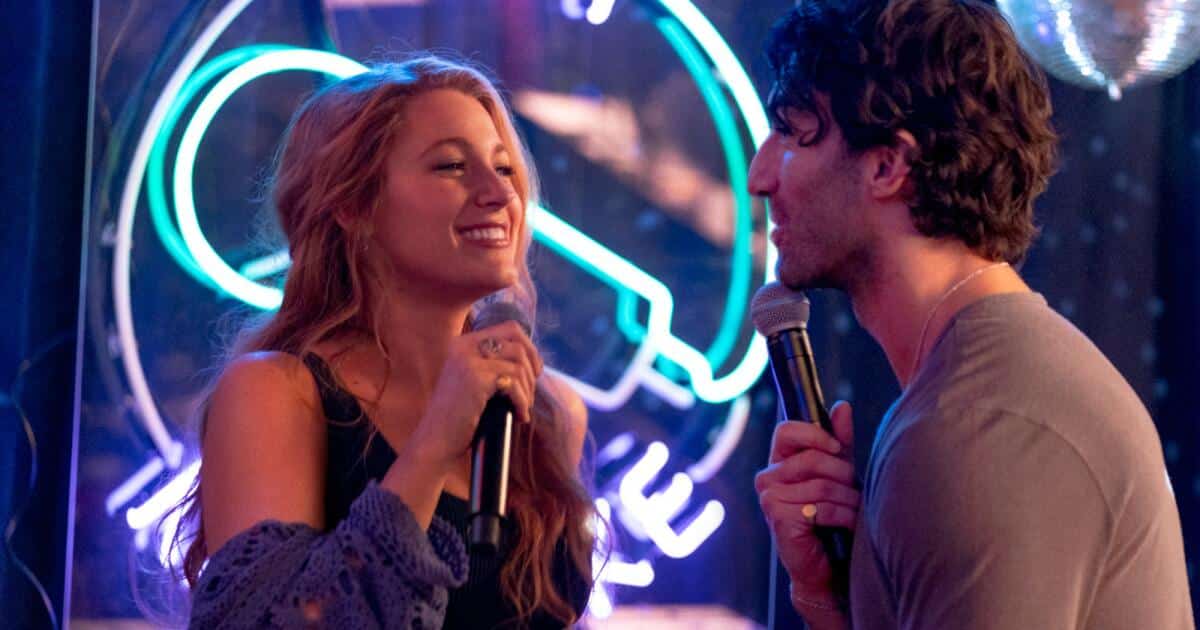
The new romantic drama, “It Ends With Us,” featuring Blake Lively, can be better understood when viewed in the context of the current publishing industry, which is predominantly influenced by female writers and readers. This context helps explain why the film was made, catering to an audience often neglected in today’s movie market, and leveraging a well-known name.
The origin of “It Ends With Us” is a highly successful 2016 novel written by Colleen Hoover, an author who initially self-published her books. The books gained such popularity on Kindle Unlimited that she landed on the New York Times bestseller list independently, before being signed by Atria Books, a subdivision of Simon & Schuster.
“It Ends With Us” is a deeply personal and emotionally charged tale for Hoover, drawing from family experiences, about a woman, Lily (portrayed in the movie by Lively), who breaks free from a pattern of domestic violence, something she witnessed in her parents’ marriage and later endures herself in a toxic relationship.
The plot revolves around Lily Bloom, a young woman residing in Boston, who aspires to open her own florist shop (aptly named “Lily Bloom’s”). The movie commences at the funeral of her father (Kevin McKidd), where Lily struggles to list even a few admirable qualities about him. Later, while reflecting on her mixed emotions on a rooftop patio at night, she meets Ryle (Justin Baldoni), an attractive neurosurgeon with a quick temper.
A chance encounter with him months later leads to a relationship, which becomes complicated when Lily unexpectedly bumps into her high-school sweetheart, Atlas (Brandon Sklenar), a handsome chef and restaurant owner. Ryle’s envy towards Atlas intensifies the already unstable nature of his relationship with Lily, which has begun to involve violence and harm, whether deliberate or otherwise.
Despite the shortcomings of Hoover’s novel, such as its immature writing style and awkward prose, it at least offers a realistic depiction of domestic violence. Lily in the book is a young woman in her early twenties and often comes across as immature, but she is at least aware of what’s happening in her relationship. Movie Lily, on the other hand, seems older and more composed; the dialogue, refined by Hall, is much wittier. However, in the film, Lily is in denial about her relationship, and the movie obscures the abuse for too long, frustratingly diminishing our heroine’s power and glossing over some of Ryle’s blatant manipulation.
Notably, Baldoni, who portrays the abusive Ryle, also directed the film. Whether it was a decision made during screenwriting or based on test screenings and audience reactions, there is an evident decision to hide Ryle’s true character, revealing his intentions late in the film, in a way that does not align with Hoover’s original narrative. This decision may have been made to prevent the audience (who may not have read the book) from rejecting his character prematurely.
Other minor modifications absolve Ryle of some of his more sinister actions. Choices to reduce and omit in the adaptation process are always required, but the ones made for “It Ends With Us” result in Lily, who appears much more grown-up and smart, becoming a character who is powerless, acquiescent, and perplexed, which is concerning given the subject matter.
Baldoni’s stylistic approach to visualizing Hoover’s world involves portraying the romantic, escapist fantasy inherent in the literary and cinematic genre: elaborate costumes and set designs, luxurious interiors, a snow-free Boston, and detailed courtship and seduction scenes set to modern indie ballads. While it doesn’t appear grounded in reality, given that it’s a romantic drama, it doesn’t necessarily have to be. However, the story must also confront harsh truths, and by toning down the trauma of Lily’s experience, it doesn’t do justice to the severe realities that Hoover revealed in her book, which clearly resonated with a substantial female audience hungry for such narratives.
“It Ends With Us” carries forward the tradition of “women’s pictures” that were a vital part of Hollywood film production in the 1940s — a time when Bette Davis could have been the leading lady in a version of this story. But women’s pictures also need to depict a grim reality that unfortunately gets clouded here, in an adaptation that is simultaneously too close and too far removed from its source.
Walsh is a Tribune News Service film critic.
Similar posts:
- Maxton Hall Season 2: Is the Prime Video Hit Show Returning?
- Shocking Reveal: Ryan Reynolds Unveils Fourth Child’s Name at ‘Deadpool & Wolverine’ Premiere!
- Jenny Slate’s Disturbing Pregnancy Secrets Revealed: You Won’t Believe What Her Body Went Through!
- Breaking News: Zellweger & Grant Back Together for 4th Epic ‘Bridget Jones’ Movie!
- Prime Video’s Cult Hero Outdoes Reacher? Epic Prequel Coming Soon!

My name is Alex Carter, a journalist with a deep passion for independent cinema, alternative music, and contemporary art. A University of California, Berkeley journalism graduate, I’ve honed my expertise through film reviews, artist profiles, and features on emerging cultural trends. My goal is to uncover unique stories, shine a light on underrepresented talents, and explore the impact of art on our society. Follow me on SuperBoxOffice.com for insightful analysis and captivating discoveries from the entertainment world.